A bale of used clothing is a tightly compressed block of fabric, and fabric does not forgive moisture. A load that arrives in good condition can be ruined in a few weeks by a damp floor, a leaking roof or a stack that leans. Whether you are holding a full load before sorting, staging goods for export or warehousing between sales, storage is part of your margin. This guide covers how to keep baled clothing dry, how to stack it safely and what to check on a regular basis.
Why Moisture Is the Real Enemy
Clothing absorbs water readily, and a compressed bale holds it in. Once the inside of a bale is damp, it dries slowly, if at all. Mold and mildew can develop, leaving odor and staining that cannot be washed out of an entire bale. A wet bale also gets heavier and less stable, which makes it harder and more dangerous to move. Most storage problems come down to one question: where could water get to this bale, from above, below or the air around it?
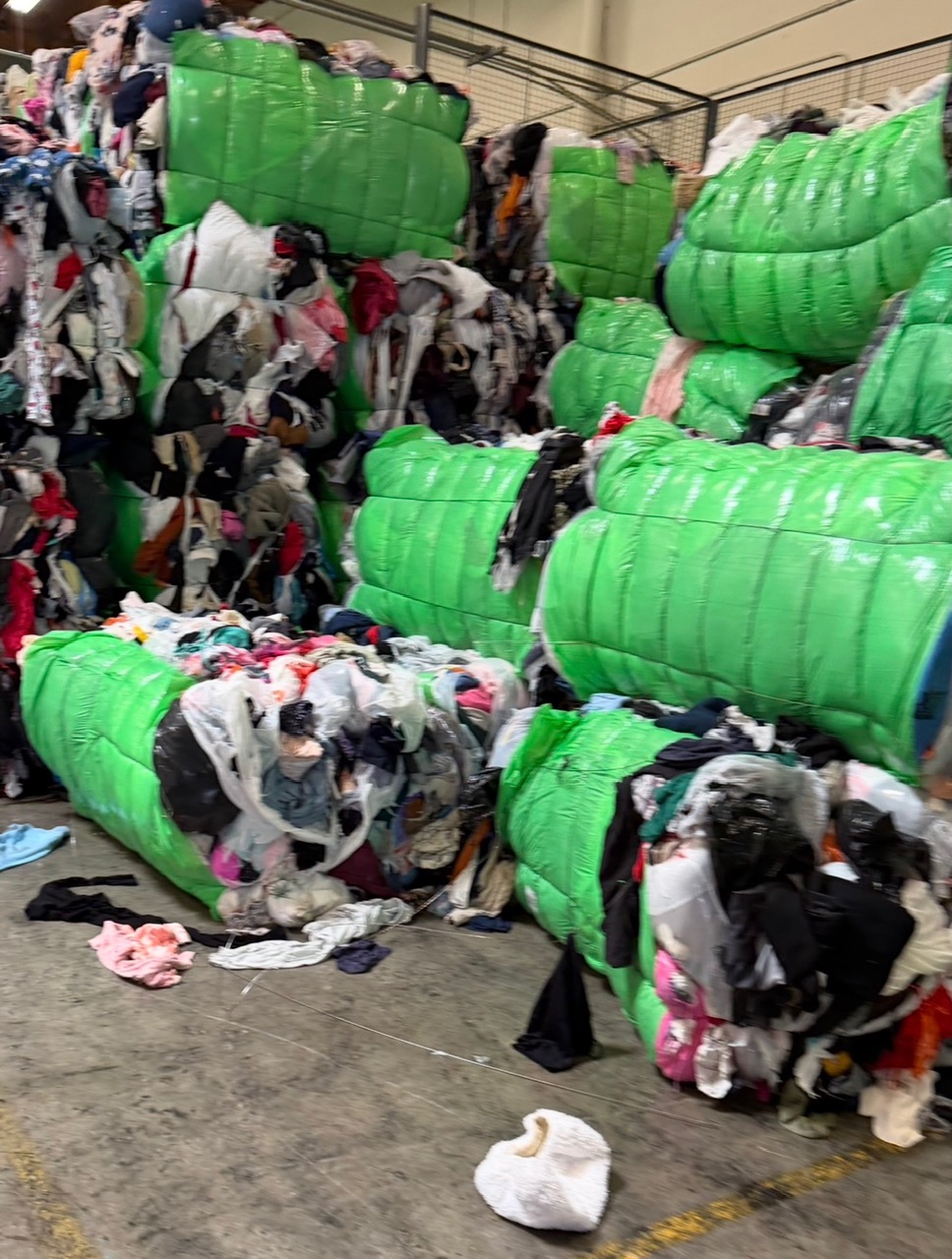
Choose the Right Space
- ·Indoor and roofed. A closed warehouse or dry building is best. Open yards and uncovered lots expose bales to rain, snow and ground water.
- ·Sound roof and walls. Walk the space after a heavy rain and look for drips, damp patches and water tracking along the walls.
- ·Good drainage around the building. Water that pools at the door or slab edge will find its way in.
- ·Ventilation. Stale, humid air encourages mildew. Air that can move past the stacks helps surfaces stay dry.
- ·Away from heat sources and open flame. Textiles burn. Keep bales clear of heaters, lighting that runs hot and any welding or cutting work, and follow your local fire code and insurer's requirements.
Get Bales Off the Floor
Concrete slabs can wick or sweat moisture, and a floor that looks dry can still dampen the bottom of a bale. Place bales on pallets, or on dunnage that lifts them clear of the floor, rather than directly on the slab. Check the pallets as well. A rotten or broken pallet will fail under weight and tilt the whole stack. If bales arrive on pallets, leave them there until you need to open them.
Stacking Without Trouble
Bales are dense and heavy, so a poor stack is a safety problem as well as a quality one. Sensible practices include:
- ·Build on a level, solid floor and keep each tier square on the one below.
- ·Stagger or interlock tiers where bale shape allows, rather than building tall, narrow columns.
- ·Keep stacks to a height your equipment and your racking or floor rating can handle safely. When unsure, go lower.
- ·Place the heaviest and firmest bales at the bottom, and never stack on damaged or soft bales.
- ·Leave aisles wide enough for forklift travel and for people to walk and inspect.
- ·Keep a clear gap from walls, sprinklers and electrical panels, as your fire code requires.
Handle Wrap and Straps With Care
Strapping and wrap protect a bale in transit and in storage. Forks that puncture wrap let moisture and dust in, and a snapped strap lets a bale expand. Lift with forks set wide and level, avoid dragging bales across rough ground and repair or replace torn wrap on bales that will sit for a while. Keep cutters away from stored bales until you are ready to sort, since an opened bale is much more exposed than a sealed one.
Rotate Stock and Inspect Regularly
Store so that the oldest stock is used first, and label stacks with the date received so nothing is forgotten at the back. A quick routine catches problems early:
- ·Walk the stacks weekly, and after any storm or leak.
- ·Look and smell for dampness, mustiness or discoloration at the base and corners.
- ·Check that stacks are not leaning and that pallets are intact.
- ·Look for signs of pests such as droppings or chewed wrap.
- ·Move any suspect bale away from the others immediately and open it to assess.
Storage on the Way to Export
If goods are heading overseas, storage does not stop at your door. Moisture inside a container can cause damage in transit, so bales should go into the container dry and container condition should be checked on loading. Your forwarder can advise on dunnage and moisture protection for your route, and our guide to the bill of lading explains how to document condition at handover. For the wider picture, see exporting used clothing by container.
Plan Storage Before You Order
A full load is a lot of material. Before you buy, work out where it will sit, how long it will wait before sorting and who will handle it. Our guide to sorting credential bales covers what happens after the straps come off, and shipping bales by full truckload explains what to prepare for delivery day.
RawBales sells full 40,000 lb loads of raw credential clothing to business buyers only. If you have a storage plan and a destination, you can request a load, or look at used clothing export containers if you ship overseas. Rules and insurance requirements vary by location, so confirm local requirements with the relevant authorities and your insurer.