A used-clothing resale business, at wholesale scale, is a sorting operation with a sales outlet attached. You buy unsorted donations, separate what can be worn from what cannot, and sell the wearable goods. The work is physical, the mix changes every load, and the clothing is sold to you as-is. This is the setup to have in place before the first order, not a promise about profit.
Decide which load you can actually receive
Rawbales has two pack-outs. A micro load starts at 10,000 lbs, ships as loose bags, and delivers in a limited list of US states at $0.70–$0.78/lb plus freight. About $7,000–$7,800 of that is the clothing, before freight. A full load is 40,000 lbs or more in bales, at $0.53–$0.60/lb plus freight, by trailer in the US or by container for export.
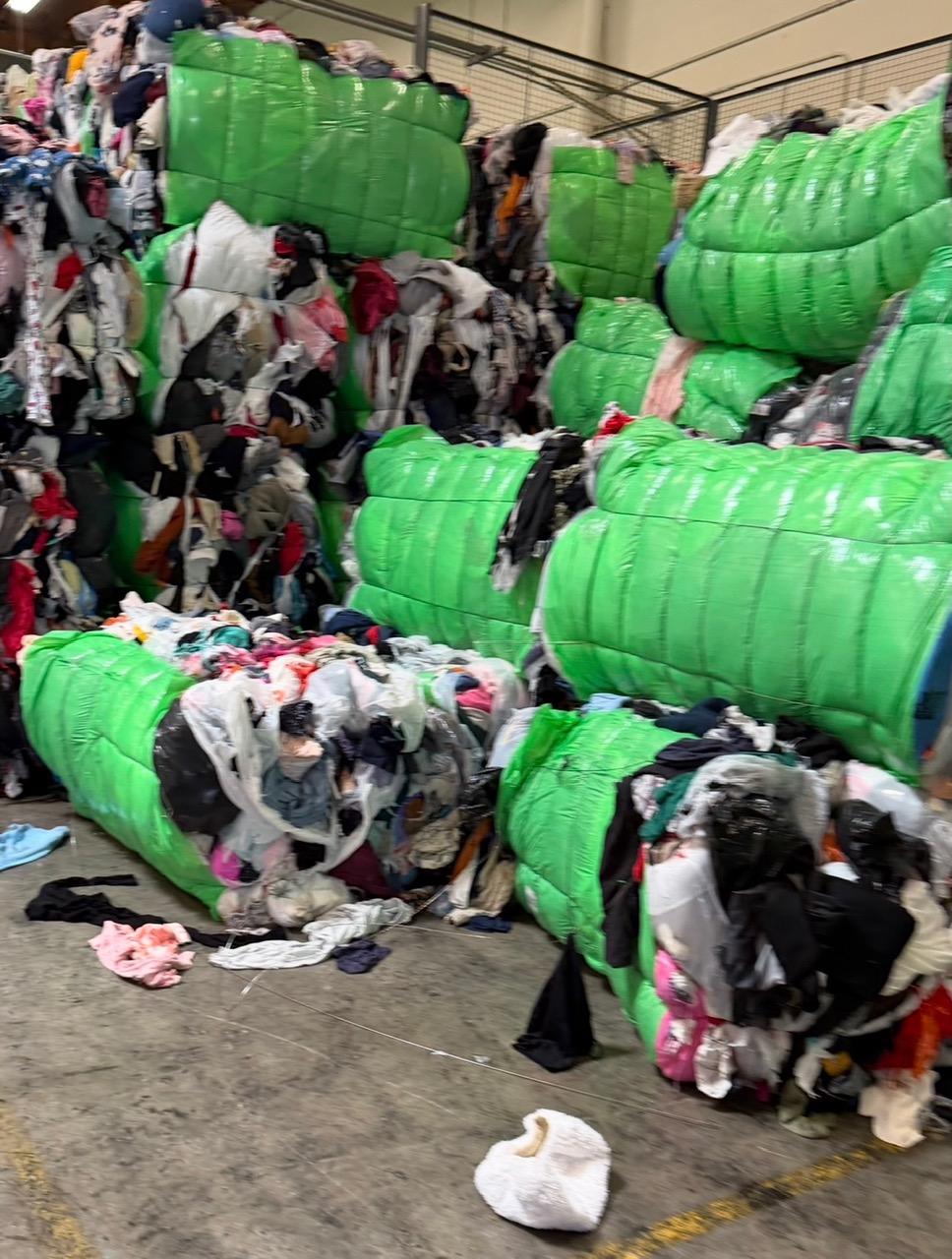
Loose bags can be unloaded without a forklift. Bales of 800–1,100 lbs cannot. If you do not have a dock and a forklift, do not order a full load and plan to “figure it out” on delivery day. The receiving checklist is the list to walk before you pay for a trailer.
What you are buying
The product is credential clothing: raw donations from charity routes. Supply can come from the East Coast, West Coast, Central, and South. Brands are not guaranteed. Nothing is graded before it ships, so the load includes clothing you will not sell as wearable goods. How those grades are usually named is covered in used clothing grades.
Micro loads are paid before they ship. Payment terms for full loads depend on the buyer; established buyers may qualify for net terms. The load is sold as-is. If the mix is weaker than you hoped, say so. That feedback can shape the next load. It does not become a credit on this one.
A first-load budget that only uses known lines
- ·Clothing: $7,000–$7,800 for a 10,000 lb micro load, or $21,200–$24,000 for a 40,000 lb reference load. A 40-foot container is heavier, about 41,000–42,000 lbs, at the same per-pound full-load rate.
- ·Freight: unknown until the origin and your address are both known. Ask for it as its own line.
- ·Space to hold the load while you sort it, and labor to do the sorting. Those are local costs. They are not on the clothing quote.
- ·A way to sell: a shop, a market, an online channel, or wholesale lots to other buyers. The channel does not change what is in the bale.
A simple first-month sequence
1. Confirm you can take the weight
Match the pack-out to the building. Micro loads in the service states if you are starting smaller. A full load only if the dock, the forklift, and the floor space are real.
2. Sort with a written grade list
Decide, before the truck arrives, which piles you will make: wearable goods you will price, goods you will wholesale on, and goods that are rags or waste. The sorting workflow is a station-by-station version of that.
3. Price from the goods, not from the average
The per-pound buy price is an average across wearable clothing and clothing that is not. Your selling prices have to carry the goods that do not sell. Track weight in and weight sold for a few loads before you assume a standing order.
4. Then talk about a schedule
Recurring orders are available weekly, bi-weekly, or monthly, for micro loads and for full loads. A schedule is useful once you know your sort rate. It is a poor idea on load one.
When the building and the grade list are ready, request a load. Questions about a lane go to mike@rawbales.com. The business itself is described on the about page.